
Fluid Management Medical Devices: Types, Components, and Materials
Written by
Arterex Medical
Published on
October 20, 2026
Read time
5 minute read
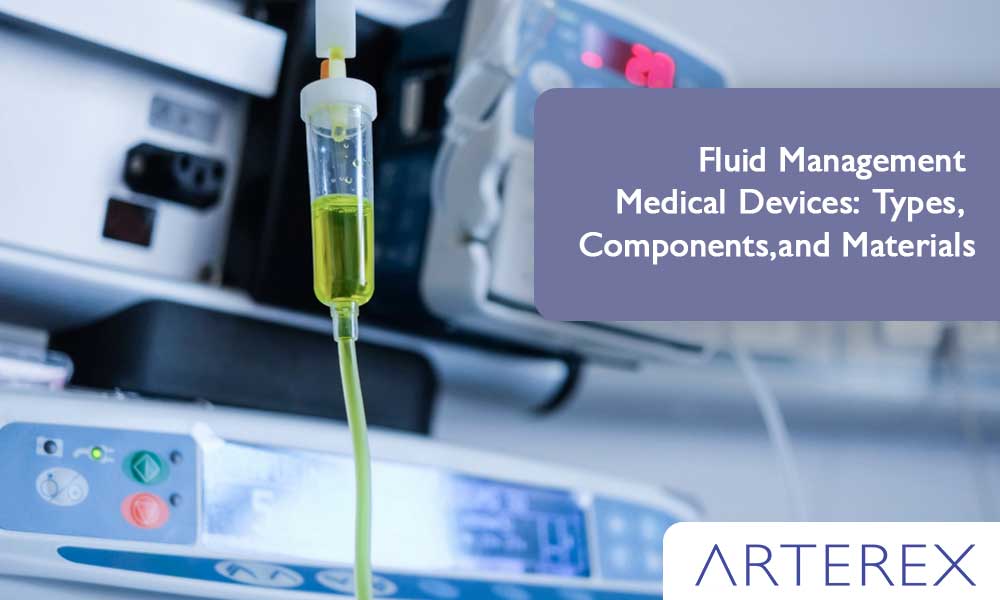
Fluid management devices move fluids into or out of the body. One industry supplier divides them into two groups: intravenous giving sets, which supply fluids to the body, and drainage devices, which remove fluids[4]. The category touches many parts of healthcare, from IV therapy and blood transfusion to nutrition delivery and drainage. This guide explains the main device types, the components inside them, the materials commonly used, and one safety topic that affects how feeding devices are built.
What counts as a fluid management device?
Arterex lists three areas under its Fluid Management market:
- Procedure bags
- Infusion (IV therapy), transfusion, and hemodialysis
- Enteral and parenteral feeding
The same page places related products in other markets: infusion systems under Drug Delivery, disposable sets and dose preparation systems under Life Science, Pharma, and Bioprocessing, and capnography tubing sets and ventilator components under Respiratory and Patient Monitoring[1].
Infusion
Infusion delivers fluids such as sterile water, electrolytes, and dextrose, usually through a gravity-fed set made up of a solution bag, a tube set, and a scalp vein set[4].
Parenteral feeding
Parenteral feeding delivers nutrition intravenously when the gut cannot absorb enough. It uses a pump-fed set and can be peripheral or total parenteral nutrition[4].
Transfusion
Transfusion supplies blood or blood components, including whole blood, red cells, platelets, and plasma, through blood bags and sets[4].
Drainage
Drainage devices remove fluid from the body. Chest drains, also called thoracic catheters, remove fluid from the pleural space using a one-way mechanism. Percutaneous pigtail catheters drain fluid from organs, ducts, or abscesses and are placed under radiological guidance[4].
Common components of IV administration sets
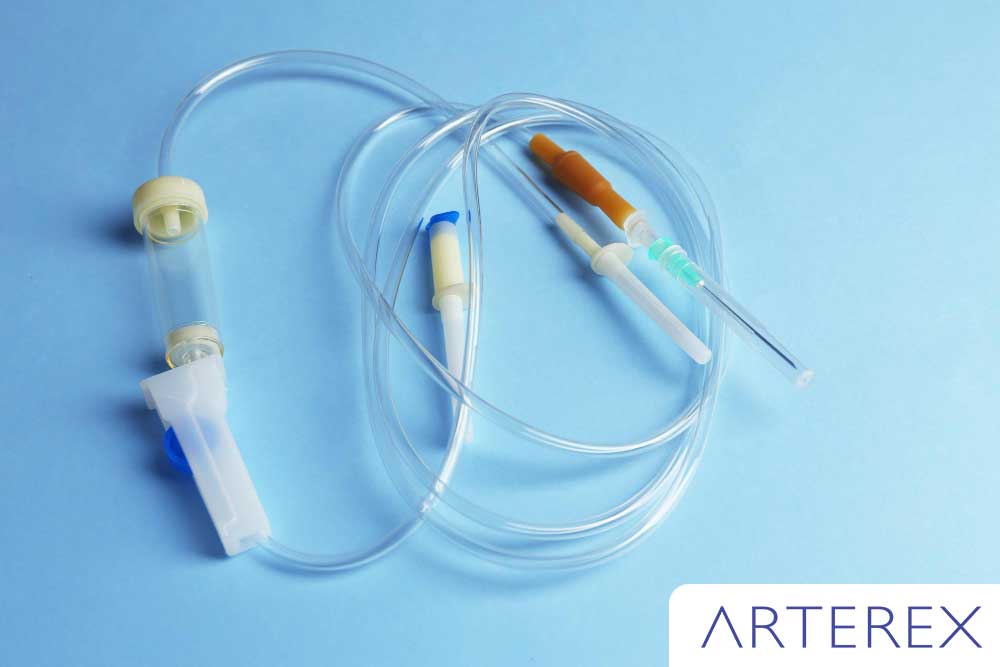
FDA’s guidance for 510(k) submissions covers intravascular administration sets and their accessories. The components it lists include extension sets, IV stopcocks and manifolds, in-line filters, flow regulators, fluid delivery tubing, vial adapters, IV transfer sets, subcutaneous administration sets, blood administration sets, and transfusion filters[3].
A basic infusion set, as described by one industry supplier, includes a solution bag, spike, drip chamber, main tube, injection port, butterfly connector, luer lock, extension tube, and cannula[4].
Materials used in fluid management devices
Material selection is central to how these devices perform[4]. The table below summarizes the materials one supplier lists for a standard infusion set. It reflects that supplier’s guidance and is not a universal specification.
| Component | Material or property noted by the source |
|---|---|
|
Solution bag |
Transparent flexible PVC with a pH buffer [4] |
|
Spike |
Rigid PVC designed for easy flowTransparent flexible PVC with a pH buffer [4] |
|
Drip chamber |
Transparent flexible PVCTransparent flexible PVC with a pH buffer [4] |
|
Main tube |
Kink-resistant flexible PVCTransparent flexible PVC with a pH buffer [4] |
|
Injection port and butterfly connectorTransparent flexible PVC with a pH buffer [4] |
Injection-molded flexible PVCTransparent flexible PVC with a pH buffer [4] |
|
Luer lock |
Crack-resistant rigid PVCTransparent flexible PVC with a pH buffer [4] |
|
Extension tube |
High molecular weight flexible PVCTransparent flexible PVC with a pH buffer [4] |
|
Cannula |
Radiopaque polyurethaneTransparent flexible PVC with a pH buffer [4] |
Transfusion sets use similar parts, with unpigmented flexible PVC for the bags, drip chamber, filter, main tube, and sampling port, and frosted or embossed bags[4].
For drainage, material choice depends on how long the device stays in place. The same supplier lists flexible PVC for pigtail catheters used under 24 hours, polyurethane for under 30 days, and silicone for over 30 days. Chest drain tubing uses mid-hardness flexible PVC, and a clear PVC or soft silicone option depending on intended duration[4].
Outside of these examples, medical tubing is made from a wider range of materials, including PVC (with DEHP-free grades), polyurethanes, polyether block amides, nylon, polyethylenes, polypropylene, thermoplastic elastomers, and engineering thermoplastics[2].
Properties that matter
The properties the supplier highlights for these parts are:
- Flexibility and kink resistance for main tubes[4]
- Transparency so contents and flow can be seen, in solution bags and drip chambers[4]
- Crack resistance in luer locks[4]
- Radiopacity for visibility under imaging, in cannulas and chest drain stripes[4]
- Material suited to the intended duration of use, for chest drains and pigtail catheters[4]
How fluid management components are made
Tubing is made by extrusion, where molten medical-grade thermoplastic is forced through a die and then sized and cooled to a defined geometry[2]. Smaller parts, such as injection ports and butterfly connectors, are injection-molded. Arterex offers tubing extrusion and injection molding, and its family of companies includes Luc & Bel, which supplies fluid management components for infusion and transfusion, Kabo, which makes medical procedure bags, and ModenPlast, a medical-grade PVC and DEHP-free extrusion specialist.
Enteral feeding and connector safety
Enteral feeding devices are one area where a specific safety issue has shaped how devices are built: misconnections. In a September 7, 2018 letter, FDA’s Center for Devices and Radiological Health said enteral devices, such as feeding tubes, can be mistakenly connected to unrelated devices, such as tracheostomy tubes. Since 2011, FDA had received reports of 2 deaths, 24 serious injuries, and 32 malfunctions tied to enteral misconnections, and the agency suspected many events go unreported or are logged as medication errors[5].
FDA recommended enteral devices built to the ISO 80369-1 or ISO 80369-3 standards, or otherwise designed to prevent misconnections. ENFit is a brand name for commercially available connectors that meet ISO 80369-3. Those connectors have slightly narrower openings than some older ones, so gravity feeding through larger tubes may take longer. FDA’s testing found slightly slower flow rates but no safety concern[5].
Regulatory snapshot
FDA publishes guidance, marked Final, to help industry prepare 510(k) premarket notifications for intravascular administration sets and their accessories. The revision updates the FDA-recognized standards and clarifies FDA’s recommendations for microbial ingress testing[3].
How Arterex Supports Fluid Management Programs
Arterex supports fluid management OEMs through:
Frequently asked questions
What is a fluid management medical device?
It is a device that supplies fluids to the body, such as IV giving sets, or removes fluids from it, such as drainage devices[4].
What is the difference between infusion and transfusion?
Infusion delivers fluids such as sterile water, electrolytes, and dextrose. Transfusion supplies blood or blood components such as red cells, platelets, and plasma[4].
What are the parts of an IV administration set?
FDA lists components including extension sets, stopcocks and manifolds, in-line filters, flow regulators, fluid delivery tubing, vial adapters, and blood administration sets [3]. A basic infusion set includes a bag, spike, drip chamber, main tube, injection port, butterfly connector, luer lock, extension tube, and cannula[4].
What materials are IV sets made from?
According to one industry supplier, most parts of a standard infusion set are PVC in flexible or rigid grades, with a radiopaque polyurethane cannula[4].
Why do enteral feeding connectors differ from other connectors?
FDA recommended connectors built to ISO 80369-1 or 80369-3 to reduce the risk of enteral devices being connected to unrelated devices[5].
Which markets use fluid management products?
Beyond the three core areas, related products appear in drug delivery, bioprocessing, and respiratory and patient monitoring[1]. Arterex also lists components and devices for fluid and respiratory management among its product categories[6].
Sources
[1] Arterex, Our Markets (Fluid Management and related markets)
[2] Arterex, Medical Tubing Extrusion (blog)
[3] U.S. FDA, Intravascular Administration Sets Premarket Notification Submissions [510(k)]
[4] Tekni-Plex Medical, Fluid Management applications (industry supplier page)
[6] Arterex, Product Categories
[7] Arterex, Manufacturing Transfers capability page
- Fluid Management Medical Devices: Types, Components, and Materials
- What counts as a fluid management device?
- Common components of IV administration sets
- Materials used in fluid management devices
- How fluid management components are made
- Enteral feeding and connector safety
- Regulatory snapshot
- How Arterex Supports Fluid Management Programs
- Frequently asked questions
- Sources