
Wearable Medical Devices: Types, How They Work, and Clinical Applications
Written by
Arterex Medical
Published on
June 13, 2025
Read time
15 minute read
Wearable medical devices are reshaping how healthcare is delivered, monitored, and managed. These sensor-integrated electronics worn on the body collect continuous physiological data including heart rate, blood oxygen, glucose levels, and movement, then transmit that data to clinicians, caregivers, or patients in real time.
The category spans a wide range of device types. Monitoring devices like CGMs, cardiac patch monitors, and pulse oximeters track health parameters without intervention.
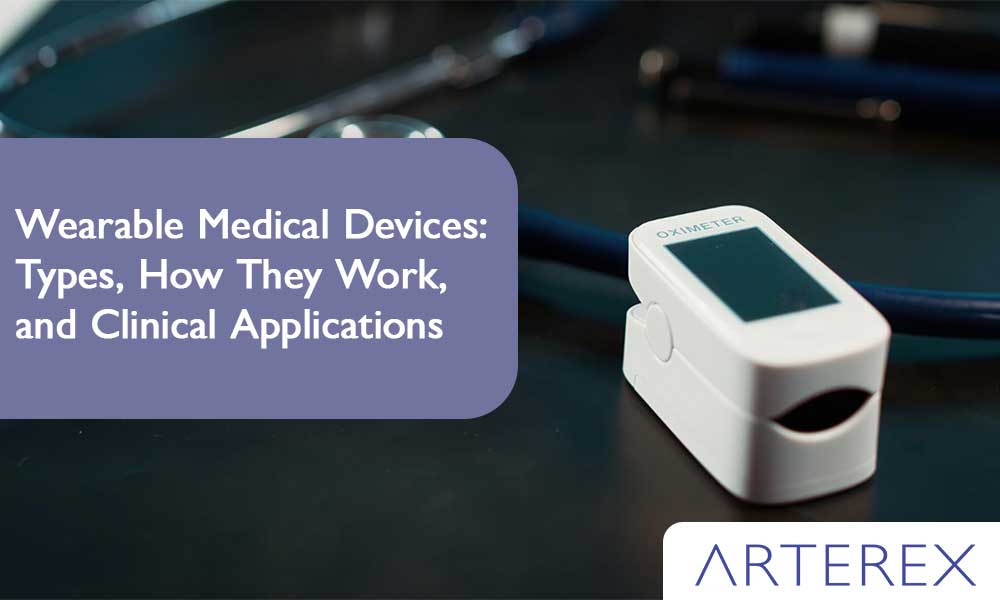
Therapeutic devices like insulin pumps, neurostimulators, and wearable defibrillators deliver active treatment. Diagnostic devices capture clinical data over defined periods. Rehabilitation devices support recovery and restore function. Consumer-grade wearables with FDA clearance now bridge clinical and everyday health tracking.
Every device in this space shares a common architecture: biosensors detect physiological signals, onboard processors convert and filter raw data, wireless protocols transmit it to connected platforms, and AI-driven algorithms turn data streams into actionable clinical insight.
The clinical benefits are substantive. Wearables enable early disease detection, reduce hospital readmissions, support remote patient monitoring, and improve chronic disease outcomes across cardiology, diabetes care, neurology, respiratory medicine, mental health, and more.
Challenges remain. Data accuracy limitations, patient adherence gaps, fragmented EHR integration, regulatory complexity, cybersecurity risks, and equity barriers all constrain widespread adoption.
The next generation of wearable medical devices is advancing toward non-invasive biomarker monitoring, closed-loop autonomous therapy, AI-powered predictive care, and smart textile integration.
This article covers everything you need to know: how wearable medical devices work, the types available, the technology behind them, their clinical applications, current limitations, and what comes next.
What Are Wearable Medical Devices?
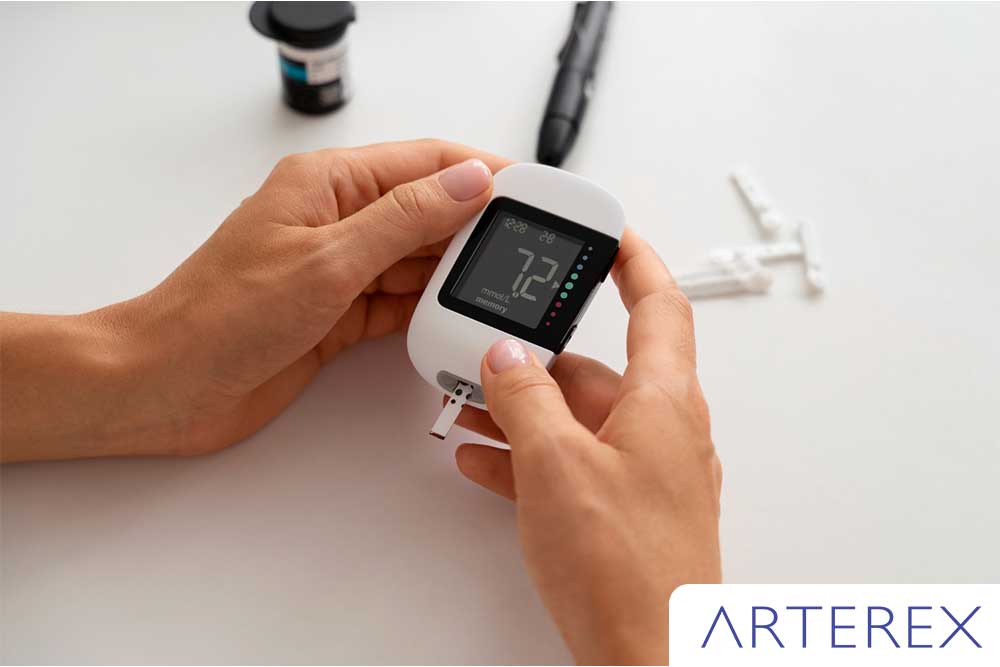
Wearable medical devices are sensor-integrated electronics worn on the body to monitor, track, or support physiological functions in real time. They collect continuous health data such as heart rate, blood oxygen, glucose levels, or movement and transmit it to clinicians, caregivers, or the patient directly.
These devices serve both diagnostic and therapeutic roles. Some detect early signs of disease. Others deliver treatment, manage chronic conditions, or support post-surgical recovery outside a clinical setting.
Wearable medical devices bridge the gap between point-of-care visits and continuous health monitoring. They reduce hospital readmissions, enable remote patient monitoring (RPM), and give clinicians actionable data between appointments.
The global wearable medical device market spans consumer health wearables, clinical-grade monitoring systems, and FDA-cleared therapeutic devices. Each category carries distinct regulatory, design, and performance requirements.
Examples of Wearable Medical Devices
- Continuous Glucose Monitors (CGMs) measure interstitial glucose levels in real time. They are used by Type 1 and Type 2 diabetic patients to reduce fingerstick dependency.
- Cardiac Monitors include Holter monitors, event recorders, and patch-based ECG devices. They detect arrhythmias, atrial fibrillation, and other cardiac anomalies over extended wear periods.
- Pulse Oximeters measure blood oxygen saturation (SpO2) and pulse rate. They are used in COPD management, sleep apnea monitoring, and post-operative care.
- Smartwatches with Medical Clearance such as FDA-cleared ECG-enabled devices bridge consumer and clinical use. They detect irregular heart rhythms and notify users of potential cardiac events.
- Wearable Insulin Pumps deliver precise subcutaneous insulin doses continuously. They are often integrated with CGMs in closed-loop artificial pancreas systems.
- Neurostimulation Devices deliver electrical impulses to target nerves or muscles. They are used in chronic pain management, Parkinson’s tremor control, and epilepsy treatment.
- Smart Patches are adhesive biosensors that monitor temperature, heart rate, respiratory rate, and hydration. They are widely used in remote patient monitoring and decentralized clinical trials.
- Wearable Blood Pressure Monitors enable ambulatory blood pressure monitoring (ABPM) without traditional cuffs. They capture readings across daily activities and sleep cycles.
- Exoskeletons and Orthotic Devices support or restore limb function in patients recovering from stroke, spinal cord injury, or mobility impairment.
- Hearing Aids and Cochlear Implants are wearable acoustic devices that amplify sound or directly stimulate auditory nerves to restore hearing function.
How Do Wearable Health Devices Work?
Wearable health devices work by combining biosensors, microprocessors, wireless communication modules, and power systems into a compact, body-worn form factor. Each component serves a specific function in the data collection and delivery pipeline.
The process follows a consistent flow: the device senses a physiological signal, converts it into digital data, processes it onboard, and transmits it to a connected app, cloud platform, or clinical system.
1. Biosensors Detect Physiological Signals
Biosensors are the core input layer of any wearable medical device. They detect electrical, optical, chemical, or mechanical signals produced by the body.
- Optical sensors use photoplethysmography (PPG) to measure blood flow and heart rate through the skin.
- Electrochemical sensors detect glucose, lactate, or electrolyte levels in interstitial fluid or sweat.
- Electrical sensors capture bioelectrical signals such as ECG, EEG, or EMG from the skin surface.
- Inertial sensors including accelerometers and gyroscopes track movement, posture, fall detection, and activity levels.
2. Signal Processing Converts Raw Data
Raw biosensor output is analog and noisy. An analog-to-digital converter (ADC) translates the signal into digital data. Onboard microcontrollers or application-specific integrated circuits (ASICs) then filter, amplify, and process this data before it leaves the device.
Edge computing capabilities in newer devices allow preliminary analysis to happen directly on the wearable. This reduces latency and lowers the volume of data transmitted to external systems.
3. Wireless Transmission Sends Data to Connected Platforms
Processed data is transmitted using short-range or wide-range wireless protocols. Bluetooth Low Energy (BLE) is the most common standard for consumer and clinical wearables. Some devices use ANT+, Zigbee, NFC, or LTE depending on range and power requirements.
Data flows from the wearable to a paired smartphone app, a dedicated receiver, or directly to a cloud-based remote patient monitoring (RPM) platform. Clinical-grade systems route data to EHR integrations or physician dashboards in near real time.
4. Software and Algorithms Interpret the Data
Raw data alone carries limited clinical value. Machine learning algorithms and clinical decision support software analyze patterns, flag anomalies, and generate actionable insights. These algorithms detect arrhythmias, predict hypoglycemic events, identify sleep stages, or track disease progression over time.
Regulatory-cleared devices use validated algorithms that meet FDA or CE performance standards for sensitivity and specificity.
5. Power Systems Sustain Continuous Operation
Wearable medical devices rely on rechargeable lithium-ion batteries, energy harvesting systems, or disposable cells depending on the device type and wear duration. Battery life is a critical design constraint, especially for continuous monitoring applications.
Some devices use wireless charging, solar energy harvesting, or kinetic energy recovery to extend operational time without interrupting patient wear.
6. The Patient or Clinician Acts on the Output
The final stage of the workflow is action. Patients receive alerts, trend reports, or coaching through a companion app. Clinicians access dashboards with longitudinal data to inform diagnosis, adjust treatment, or intervene remotely.
This closed-loop model of sense, process, transmit, analyze, and act is what makes wearable health devices a foundational tool in modern preventive care, chronic disease management, and remote patient monitoring.
What Are the Types of Wearable Medical Devices?
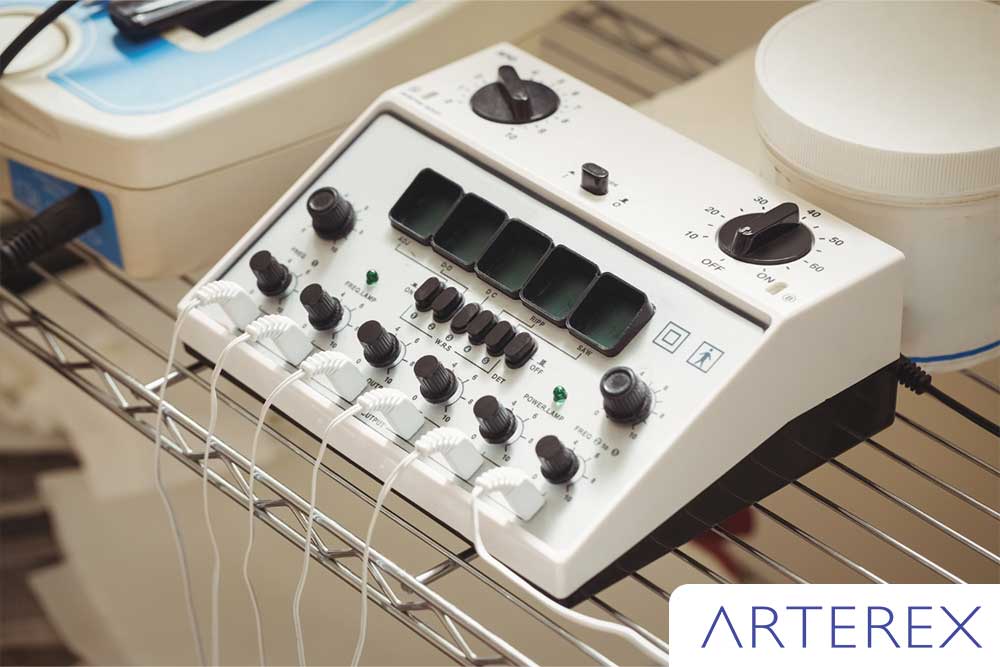
Wearable medical devices are classified by their placement on the body, their clinical function, and their regulatory status. Understanding the types helps clinicians, developers, and procurement teams select the right device for a specific care pathway.
1. Wearable Monitoring Devices
Monitoring devices continuously track physiological parameters without delivering any treatment. They form the largest segment of the wearable medical device market.
- Cardiac monitors record ECG signals to detect arrhythmias, atrial fibrillation, and conduction abnormalities. Types include Holter monitors, ambulatory cardiac monitors, and adhesive patch monitors.
- Pulse oximeters measure SpO2 and pulse rate. Wrist-worn and finger-clip variants are used in both home care and clinical settings.
- Continuous glucose monitors (CGMs) track interstitial glucose levels in real time. They are used in diabetes management to guide insulin dosing and prevent hypoglycemic episodes.
- Wearable blood pressure monitors enable ambulatory blood pressure monitoring (ABPM) across daily activity and sleep without restricting patient movement.
- Body temperature patches detect fever, infection indicators, or hypothermia through continuous skin temperature measurement.
- Respiratory monitors track breathing rate, tidal volume, and oxygen saturation. They are used in COPD, asthma, and sleep apnea management.
2. Wearable Therapeutic Devices
Therapeutic wearables deliver active treatment rather than passive monitoring. They intervene directly in a physiological process.
- Insulin pumps deliver subcutaneous insulin continuously. Patch pumps and tethered pumps are the two primary form factors used in Type 1 diabetes care.
- Neurostimulation devices use electrical impulses to modulate nerve activity. Transcutaneous electrical nerve stimulation (TENS) units target chronic pain. Vagus nerve stimulators treat epilepsy and depression. Deep brain stimulation systems manage Parkinson’s disease symptoms.
- Wearable defibrillators such as the LifeVest monitor cardiac rhythm and deliver a shock if a life-threatening arrhythmia is detected. They are used in patients at elevated sudden cardiac death risk before an ICD implant.
- Phototherapy devices deliver targeted light wavelengths to treat conditions like neonatal jaundice, psoriasis, or seasonal affective disorder.
- Drug delivery patches use transdermal or iontophoretic mechanisms to administer medications such as hormones, analgesics, or antiemetics through the skin.
3. Wearable Diagnostic Devices
Diagnostic wearables capture data used to confirm, rule out, or characterize a medical condition. They are often prescribed for a defined monitoring period.
- Event monitors and loop recorders capture cardiac data only when triggered by the patient or by an algorithm detecting an abnormal event.
- EEG headsets record brain electrical activity for seizure detection, sleep disorder diagnosis, and neurological condition monitoring.
- EMG wearables measure muscle electrical activity for neuromuscular disorder diagnosis and rehabilitation progress tracking.
- Sleep monitoring devices track sleep stages, apnea events, oxygen desaturation, and movement. They support diagnosis of obstructive sleep apnea (OSA) and other sleep disorders.
4. Wearable Rehabilitation and Assistive Devices
These devices support recovery from injury or surgery, or compensate for permanent physical impairment.
- Exoskeletons are powered orthotic frames that assist or restore limb movement in patients with stroke, spinal cord injury, or muscular dystrophy.
- Smart orthoses use sensor feedback and actuators to correct gait, support joints, and prevent secondary injury during rehabilitation.
- Functional electrical stimulation (FES) devices stimulate paralyzed or weakened muscles to produce purposeful movement in spinal cord injury and stroke patients.
- Hearing aids and cochlear implants amplify acoustic signals or bypass damaged auditory structures to restore hearing function.
5. Consumer Health Wearables with Clinical Applications
A growing category of consumer devices now carries FDA clearance or CE marking for specific clinical indications.
- Medical-grade smartwatches detect atrial fibrillation, measure ECG, track SpO2, and monitor sleep quality. Cleared devices generate reports that clinicians can use in diagnostic workflows.
- Smart rings measure heart rate variability (HRV), resting heart rate, body temperature, and sleep metrics with clinical-level accuracy in a low-profile form factor.
- Fitness trackers with health clearances capture step count, activity intensity, caloric expenditure, and menstrual cycle data. Certain cleared models support fall detection and irregular rhythm notifications for elderly or high-risk users.
Each type of wearable medical device serves a distinct clinical purpose. The boundaries between monitoring, diagnostic, and therapeutic functions are increasingly blurred as devices gain multi-modal sensing and AI-driven decision support capabilities.
Key Technologies Behind Wearable Medical Devices
Wearable medical devices are built on a convergence of hardware, software, and connectivity technologies. Each layer contributes to the device’s ability to collect accurate data, sustain continuous operation, and deliver clinically meaningful output.
- Biosensor technology is the foundation of every wearable device. MEMS-driven miniaturization has enabled clinical-grade optical, electrochemical, bioelectrical, piezoelectric, and inertial sensors to fit into watch straps, skin patches, and rings.
- Signal processing and edge computing extract usable clinical data from raw sensor output. Low-power ARM Cortex-M processors run noise filtering, amplification, and preprocessing algorithms locally, reducing latency and cloud bandwidth requirements.
- Wireless communication standards including BLE, ANT+, Zigbee, NFC, and LTE enable continuous or intermittent data transmission to smartphones and clinical platforms. Medical-grade devices must meet RF emission standards for safe operation near other electronic medical equipment.
- AI and machine learning turn continuous data streams into clinical insight. Validated algorithms detect arrhythmias, forecast hypoglycemic events, identify sepsis risk, and track mental health biomarkers. FDA-cleared AI-based Software as a Medical Device (SaMD) products must demonstrate performance across diverse demographic populations.
- Power management and energy harvesting address the fundamental constraint of battery life in compact form factors. Thermoelectric generators, piezoelectric harvesters, solar cells, and wireless charging systems supplement lithium-ion batteries. Dynamic power scaling adjusts sampling rate and transmission frequency to extend runtime without compromising monitoring continuity.
- Flexible and stretchable electronics use polyimide, PDMS, and thermoplastic polyurethane substrates to create circuits that conform to skin. Stretchable interconnects maintain electrical continuity during movement. Printed electronics enable scalable, cost-effective single-use biosensor patches.
- Data security and interoperability standards protect sensitive PHI across the device-app-cloud pipeline. End-to-end encryption, HIPAA compliance, HL7 FHIR integration with EHR systems, and ISO/IEC 27001 certification are baseline requirements for clinical deployments.
Benefits of Wearable Medical Devices
Wearable medical devices deliver measurable clinical, operational, and economic value across the full care continuum. Their impact extends from individual patient outcomes to health system efficiency and population health management.
- Continuous real-time monitoring replaces episodic clinical snapshots with uninterrupted physiological data streams. Nocturnal arrhythmias, asymptomatic hypoglycemic episodes, and transient hypertension spikes that occur between appointments become visible and actionable.
- Early disease detection is enabled by longitudinal data trends that identify deviations from a patient’s baseline before symptoms appear. Paroxysmal atrial fibrillation, pre-diabetic glucose patterns, and undiagnosed sleep apnea are consistently detected earlier through wearable monitoring than through standard point-of-care assessment.
- Remote patient monitoring programs reduce 30-day hospital readmission rates in heart failure, post-surgical, and chronic disease populations. RPM supports hospital-at-home models that deliver inpatient-equivalent monitoring at lower cost and infection risk.
- Chronic disease management improves measurably. CGM users achieve lower HbA1c levels and fewer hypoglycemic episodes. Heart failure patients using wearable fluid monitors experience fewer unplanned hospitalizations. Hypertensive patients on ABPM programs provide clinicians with accurate 24-hour data that eliminates white coat hypertension bias.
- Patient engagement increases when health data is continuously visible. Patients respond to direct feedback on the physiological impact of diet, exercise, and sleep, arriving at consultations with objective longitudinal data rather than subjective recall.
- Clinical trial acceleration through decentralized trial (DCT) designs reduces site visit burden, improves enrollment diversity, and produces denser, more representative datasets. Real-world evidence from wearables is increasingly accepted in regulatory submissions.
- Cost reduction operates at multiple levels: fewer emergency department visits, shorter hospital stays, lower readmission rates, and reduced unnecessary diagnostic procedures. Medicare reimbursement under CPT codes 99453, 99454, 99457, and 99458 reflects growing payer recognition of RPM cost-effectiveness.
- Elder care support extends safe independent living through fall detection, cardiac monitoring, medication adherence tracking, and automatic emergency alerts for patients living alone.
Applications of Wearable Medical Devices in Healthcare
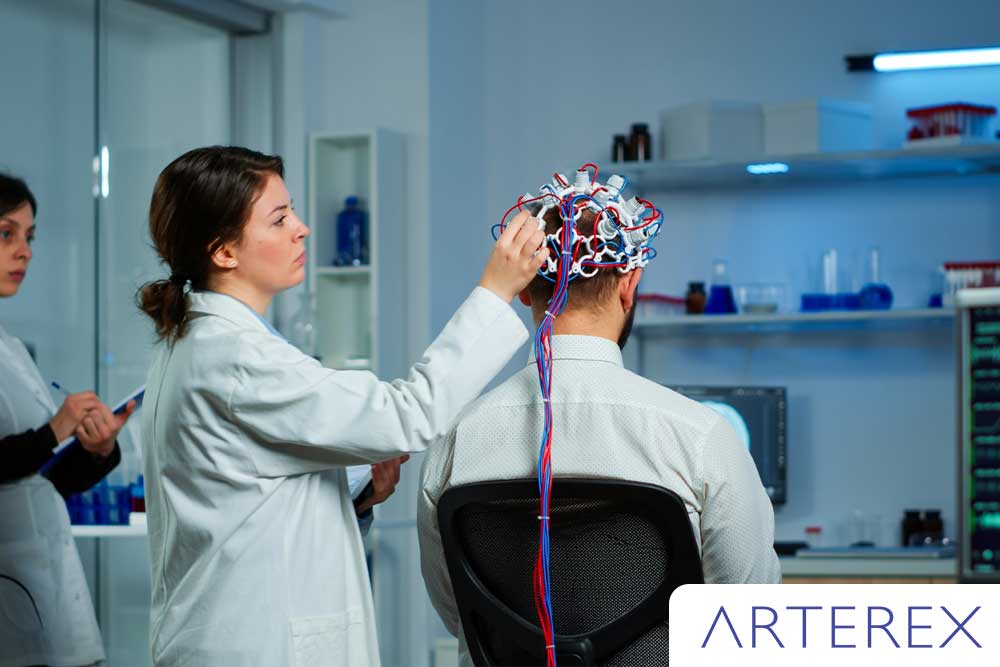
Wearable medical devices are deployed across virtually every clinical specialty. Their ability to collect continuous, real-world physiological data makes them valuable in diagnosis, treatment, monitoring, and rehabilitation across a wide range of conditions and care settings.
- In cardiology, patch ECG monitors, ambulatory blood pressure devices, and wearable cardioverter-defibrillators address arrhythmia detection, hypertension management, and sudden cardiac death prevention.
- In diabetes care, CGMs and closed-loop artificial pancreas systems have fundamentally changed glycemic management for Type 1 and Type 2 patients, reducing the cognitive burden of insulin dosing and the clinical risk of hypoglycemia.
- In neurology, wearable EEG headsets monitor epilepsy outside hospital settings. Tremor monitors provide objective Parkinson’s disease assessment. Vagus nerve stimulators deliver on-demand therapy triggered by detected abnormal brain activity.
- In respiratory medicine, wearable pulse oximeters and home sleep apnea testing devices support COPD management, asthma monitoring, and OSA diagnosis without requiring laboratory polysomnography.
- In oncology, cardiac monitors detect chemotherapy-induced cardiotoxicity. Activity and sleep monitors capture functional status data that predicts treatment tolerance. Wearable biosensors track hydration and electrolyte balance in patients on nephrotoxic regimens.
- In mental health, HRV monitoring tracks autonomic nervous system function as a stress and anxiety proxy. Actigraphy detects circadian rhythm disruption in bipolar disorder. Wearable-integrated digital therapeutics deliver CBT exercises triggered by real-time physiological stress signatures.
- In rehabilitation, IMU sensors quantify gait and range of motion. Exoskeletons support ambulation training. FES devices activate paralyzed muscles during task-specific neuroplastic recovery training.
- In women’s health, wearable fertility monitors, gestational CGMs, and remote fetal monitoring devices address a historically underserved area of medical device development.
- In pediatrics and elder care, specialized wearables address neonatal monitoring, pediatric seizure detection, fall response, medication adherence, and dementia progression tracking in populations with distinct physiological and usability requirements.
Challenges and Limitations of Wearable Medical Devices
Wearable medical devices offer significant clinical value, but their adoption and performance are constrained by a range of technical, regulatory, clinical, and human factors challenges. Understanding these limitations is essential for manufacturers, clinicians, and health systems deploying wearable technology in real-world care settings.
- Data accuracy is constrained by motion artifact, skin tone variation, electrode contact degradation, and environmental interference. FDA scrutiny of PPG-based SpO2 accuracy across diverse demographic groups is increasing following evidence of systematic bias.
- Patient adherence drops significantly after initial adoption. Device discomfort, alarm fatigue, aesthetic concerns, and usability barriers in cognitively impaired or elderly patients undermine the longitudinal data continuity that makes wearable monitoring clinically valuable.
- Clinical integration remains difficult. Continuous high-volume wearable data streams exceed current clinical review capacity. Proprietary data formats, limited EHR integration, and the absence of standardized wearable data schemas create fragmented workflows.
- Regulatory complexity spans FDA Class I, II, and III pathways, EU MDR requirements, and evolving AI SaMD guidance. Global fragmentation requires manufacturers to manage multiple simultaneous regulatory processes for international market access.
- Cybersecurity risks include Bluetooth interception, PHI exposure through cloud breaches, third-party app data sharing, and firmware vulnerabilities. FDA guidance requires manufacturers to implement secure product development frameworks and maintain software bills of materials throughout the device lifecycle.
- Battery constraints force tradeoffs between monitoring continuity, device miniaturization, and recharging frequency. Energy harvesting technologies remain insufficient as standalone primary power sources.
- Equity and access gaps limit wearable benefits to populations with device affordability, smartphone ownership, internet access, and digital literacy. Algorithm bias from non-representative validation datasets introduces performance disparities across demographic groups.
- Reimbursement barriers constrain market access for devices outside defined CPT code categories. Generating the health economic evidence payers require is expensive, and fee-for-service structures do not adequately compensate for the clinical management time wearable data programs demand.
Future Trends in Wearable Healthcare
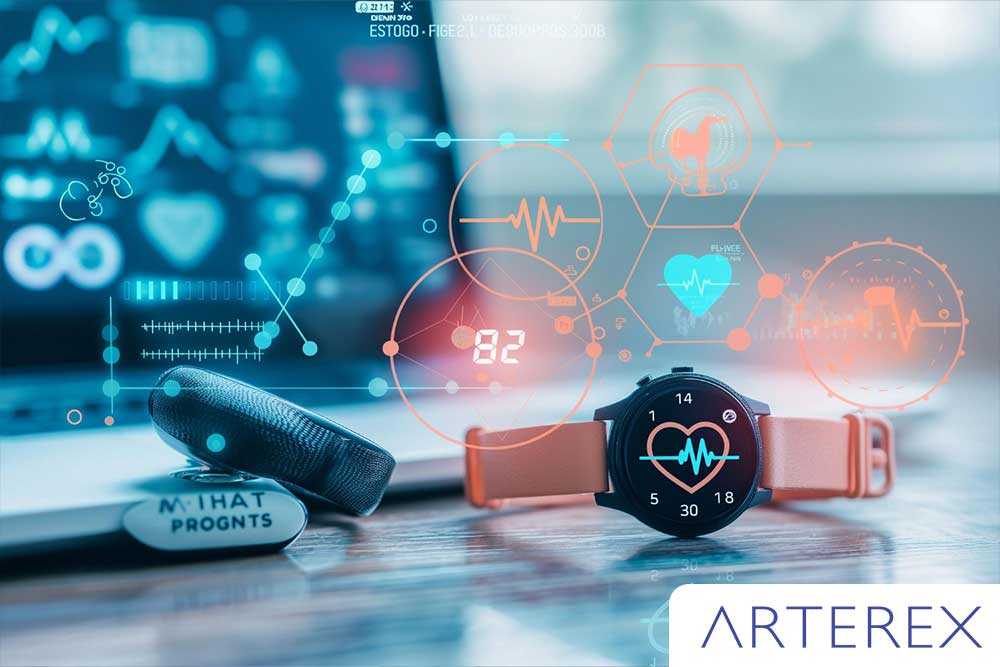
Wearable healthcare technology is advancing faster than at any previous point in its development. Convergence across materials science, artificial intelligence, biotechnology, and connectivity is driving a new generation of devices that are smaller, smarter, and clinically more capable than current systems.
- Continuous non-invasive biomarker monitoring is the most actively pursued frontier. Sweat-based biosensor arrays and optical skin analysis platforms are advancing toward non-invasive CGM and real-time metabolic panels without subcutaneous filaments or blood draws.
- AI-powered predictive care is shifting wearables from reactive monitoring to proactive intervention. Models trained on longitudinal datasets will forecast atrial fibrillation, sepsis, COPD exacerbations, and mental health episodes days before clinical symptoms emerge.
- Closed-loop therapeutic systems will extend the artificial pancreas model to neurostimulation, transdermal drug delivery, and cardiac devices that sense, decide, and treat autonomously without patient or clinician intervention.
- Subdermal and bioresorbable devices are narrowing the boundary between wearable and implantable. Injectable biosensors and dissolvable electronics will perform monitoring or therapeutic functions and then harmlessly resorb within the body.
- Smart textiles will embed dry ECG electrodes, pressure sensors, and wound monitoring biosensors directly into garments and dressings, removing the friction of device adoption and improving adherence in pediatric and elderly populations.
- Digital therapeutics integrated with wearables will deliver adaptive, physiologically triggered interventions for chronic pain, mental health, and behavioral conditions, supported by evolving FDA regulatory pathways.
- 5G and edge AI will enable real-time remote clinical decision support with on-device algorithm execution, eliminating cloud latency and enabling hospital-at-home programs at inpatient monitoring density.
- Regulatory modernization through FDA’s PCCP framework, De Novo pathway, and growing real-world evidence acceptance is creating commercially viable routes for the next generation of AI-driven wearable medical devices.
- Wearable Medical Devices: Types, How They Work, and Clinical Applications
- What Are Wearable Medical Devices?
- How Do Wearable Health Devices Work?
- What Are the Types of Wearable Medical Devices?
- Key Technologies Behind Wearable Medical Devices
- Benefits of Wearable Medical Devices
- Applications of Wearable Medical Devices in Healthcare
- Challenges and Limitations of Wearable Medical Devices
- Future Trends in Wearable Healthcare