
Medical Tubing Extrusion: Types, Process, Materials, and Applications
Written by
Arterex Medical
Published on
September 28, 2026
Read time
18 minute read
Medical tubing extrusion is the continuous manufacturing process that converts medical grade thermoplastic resin into precision tubing for the devices that move fluids, gases, wires, and instruments through the body and through the equipment supporting it. Molten polymer is forced through a die, sized and cooled into a defined geometry, and then held to that geometry across production runs measured in thousands of feet rather than in individual parts.
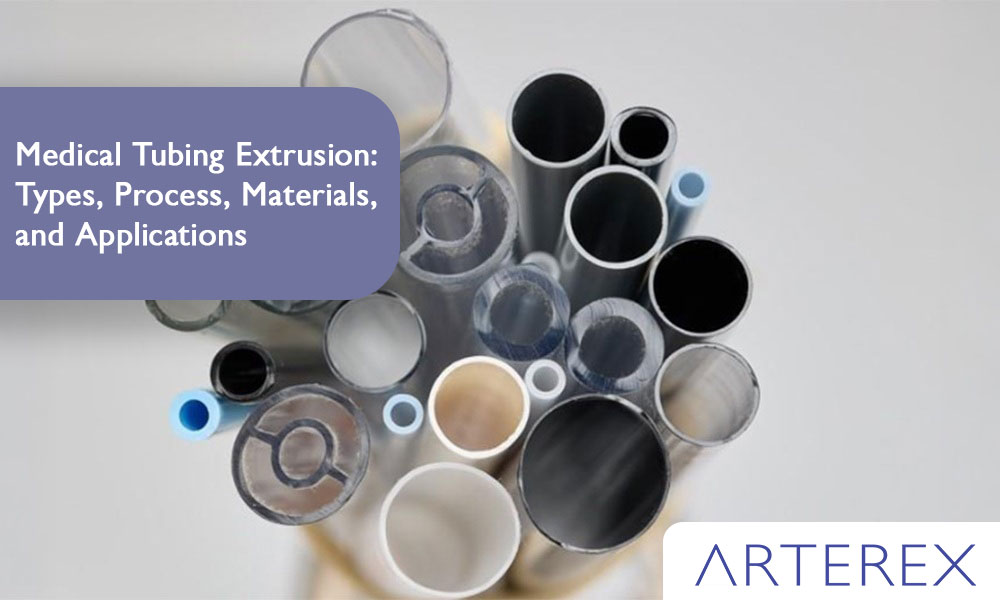
The category covers considerably more than round tube. Single lumen tubing carries one channel at tight tolerance, multi-lumen tubing carries several isolated channels inside a single wall, and profile extrusion produces non-round cross sections engineered for a specific device function. Paratubing joins parallel lumens in one ribbon, parawire and over-the-wire extrusion encapsulate wires and metal profiles directly within the polymer, and co-extrusion combines two or more materials in a single wall.
Every extruded medical tube moves through the same production sequence. Material is selected and compounded, resin is dried and fed into the extruder, the polymer is melted and conveyed, the profile is formed through die and tip tooling, vacuum sizing and cooling lock in the geometry, inline gauging and puller control hold the dimensions, and the finished tube is cut or coiled for secondary operations and inspection.
Material selection drives nearly every performance characteristic of the finished tube. Medical grade PVC and DEHP-free PVC, polyurethanes including Pellethane, Carbothane, and Tecoflex, Pebax, nylon, high density and low density polyethylene, polypropylene, EVA, TPE and SEBS, Hytrel, polycarbonate, acrylic, polyester, and butyrate each contribute a different balance of flexibility, clarity, chemical resistance, dimensional stability, and bonding behavior.
Applications extend across most of the device landscape. Extruded tubing supports neurological and laparoscopic devices, catheter construction, capnography and ventilator sets, oxygen therapy, dialysis, urology, infusion and transfusion sets, anesthesia and intensive care, diagnostic sample collection, and life science and bioprocessing consumables.
Quality requirements are what separate medical extrusion from industrial extrusion. Cleanroom processing, validated procedures, documented material traceability, biocompatibility evidence, and tolerance control measured in thousandths of an inch all apply before a single foot of tubing is released for device assembly.
This article covers what medical tubing extrusion is, the types of tubing produced, how the process works step by step, the materials involved, the secondary operations performed downstream, the clinical applications served, the quality and regulatory requirements that govern the work, the challenges manufacturers face, and how to evaluate an extrusion partner.
What Is Medical Tubing Extrusion?
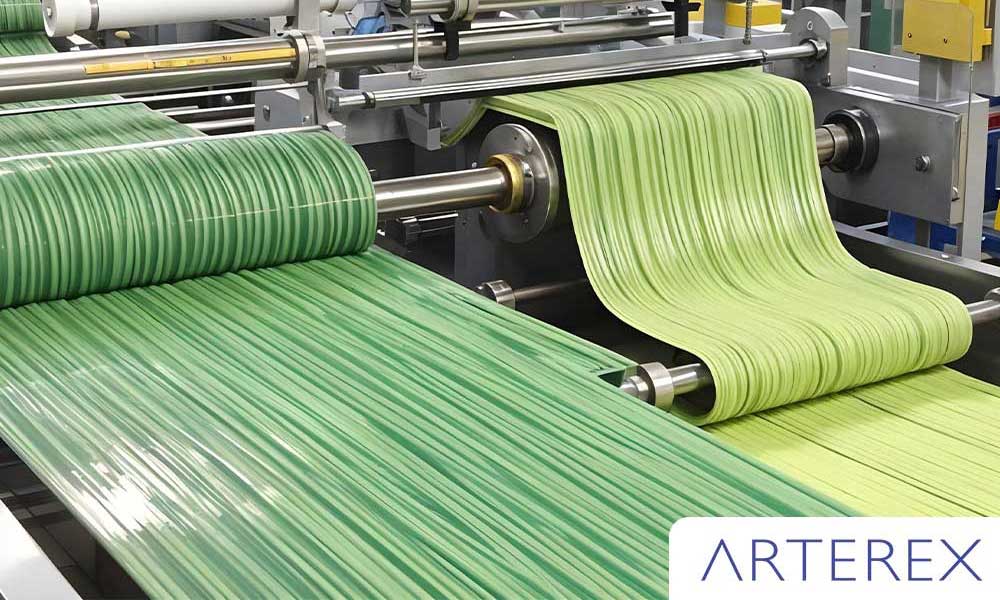
Medical tubing extrusion is a continuous forming process in which medical grade thermoplastic resin is melted, forced through a shaped die, and drawn down to a precise cross section that is then cooled, measured, and cut to length. Unlike injection molding, which produces discrete parts in a closed mold, extrusion produces a continuous length of material with a constant cross section, which makes it the defining process for medical tubing, filaments, and profiles.
The output of the process ranges from simple packaging tubes through to the demanding tight tolerance products used in neurological and laparoscopic devices. Arterex operates cleanroom extrusion capability across its network, including eight extrusion lines across 55,000 square feet of manufacturing space in Hudson, Massachusetts, and ten extrusion lines in Fiorano, Italy, where medical grade PVC compounding and extrusion experience extends across more than 50 years.
What Makes Medical Tubing Different From Standard Plastic Tubing?
Medical tubing is defined by the requirements attached to it rather than by its appearance. The characteristics below distinguish it from commodity extrusion.
- Resins are selected and documented for patient contact, with testing aligned to ISO 10993 where the application requires it.
- Dimensional tolerance. Inside diameter, outside diameter, wall thickness, and concentricity are controlled to tight limits because downstream bonding, tipping, and assembly operations depend on them.
- Processing takes place in controlled environments, including ISO Class 8 cleanroom extrusion space, to limit particulate and bioburden.
- Lot and component level traceability is maintained through enterprise resource planning systems so that any finished length can be traced back to its resin lot.
- Installation, operational, and performance qualification protocols govern the process rather than the operator, which is what makes results reproducible across shifts and sites.
- Material compliance. Requirements such as DEHP-free formulation, radiopacity, or UV protection are built into the compound rather than added afterward.
What Are the Types of Medical Tubing?
The types of medical tubing produced through extrusion are listed below:
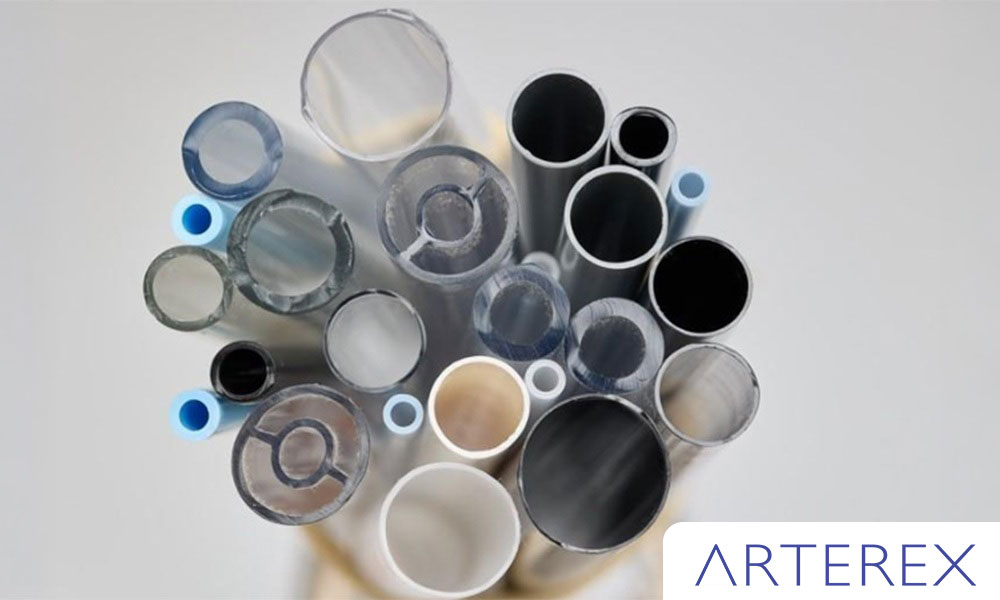
- Single lumen tubing carries one continuous channel and represents the largest volume category in medical extrusion. Tight tolerance single lumen tubing is used wherever flow rate, bond fit, or device assembly depends on a predictable inside diameter.
- Multi-lumen tubing carries two or more isolated channels within a single wall. This construction allows a single tube to deliver fluid, carry a wire, and provide an inflation or aspiration path at the same time, which is essential in catheter based devices where outer diameter is constrained.
- Profile extrusion produces non-round cross sections shaped to a specific device function. Profiles are used where a round tube cannot provide the required keying, sealing surface, or internal geometry.
- Paratubing places two or more lumens side by side in a single extruded ribbon. The lumens remain independent while being handled, printed, and assembled as one component.
- Parawire and over-the-wire extrusion encapsulates wires or metal profiles within the polymer during the extrusion run. This eliminates a separate assembly step and produces a bonded construction that would be difficult to achieve downstream.
- Co-extruded tubing combines two or more materials in a single wall, which allows a stiff layer to be paired with a soft layer, a lubricious inner surface to be paired with a bondable outer surface, or a radiopaque stripe to be built directly into the extrusion.
- Tapered and bump tubing changes diameter along its length. Tapers support smooth transitions in delivery devices, and bump tubing creates a defined dimensional change at a specific point in the length.
- Radiopaque and marked tubing incorporates fillers such as barium into the compound or applies printed markings so that position and depth can be confirmed during a procedure.
- Anti-kinking tubing is formulated and dimensioned to resist collapse under bending, which protects flow continuity in lines that are routed around equipment and patients.
- Wire coated tubing and precision filaments apply a controlled polymer layer over a wire substrate or produce solid monofilament, including x-ray detectable monofilament threads used in surgical products.
- Bubble, twin, and triple tubing covers specialized multi-body constructions used in infusion, transfusion, and fluid management sets where several lines must be managed as a single assembly.
How Does the Medical Tubing Extrusion Process Work?
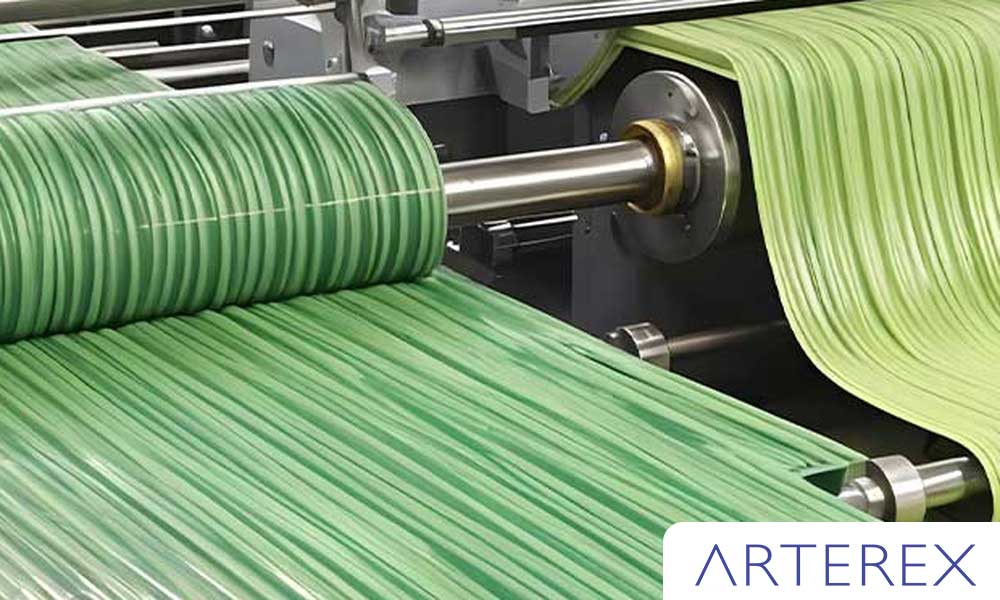
The medical tubing extrusion process moves material through a controlled sequence of stages, each of which contributes to the dimensional accuracy and cleanliness of the finished tube.
Step 1: Material Selection and Compounding
The process begins with the resin. Compounding blends base polymer with the additives that deliver the required properties, which can include plasticizer systems, DEHP-free formulations, radiopaque fillers, colorants, and UV protection. Custom compounding gives the manufacturer direct control over the material entering the extruder rather than dependence on an off the shelf grade, and Arterex performs medical grade PVC compounding in house.
Step 2: Drying and Feeding
Many medical polymers absorb moisture from the air, and moisture in the melt produces voids, surface defects, and inconsistent dimensions. Resin is dried to a specified level and then metered into the extruder throat under controlled conditions so that the feed rate remains stable throughout the run.
Step 3: Melting and Conveying
Inside the extruder barrel, a rotating screw conveys the resin forward while heat from the barrel and shear from the screw bring the material to a uniform melt. Temperature profile, screw speed, and pressure are held within validated ranges because variation at this stage carries directly through to the finished dimensions.
Step 4: Forming Through Die and Tip Tooling
The melt is forced through tooling that consists of a die, which forms the outside surface, and a tip or pin, which forms the inside surface. Tooling geometry determines whether the output is single lumen, multi-lumen, profile, paratubing, or a co-extruded construction. Drawdown between the tooling and the sizing stage allows a single toolset to produce a range of related dimensions.
Step 5: Vacuum Sizing and Cooling
The extrudate leaves the tooling in a soft state and must be sized and cooled before it can hold its shape. Vacuum sizing draws the tube against a calibrated sizing element while cooling water sets the polymer, which is the stage that determines roundness and concentricity. Expanded vacuum sizing capability allows superior roundness to be achieved at tight tolerances on challenging extrusions.
Step 6: Inline Measurement and Puller Control
Laser gauges and other inline measurement systems monitor outside diameter, wall thickness, and ovality continuously. The puller sets line speed, and adjusting puller speed against extruder output is the primary control for wall thickness. Closed loop correction keeps the process centered rather than allowing drift to accumulate across a long run.
Step 7: Cutting, Coiling, and Identification
Finished tubing is cut to length or coiled in continuous lengths depending on the downstream requirement. Printing can be applied inline to add lot identification, graduation marks, or branding. Product is then packaged in a manner consistent with the cleanliness classification of the application.
Step 8: Secondary Operations and Inspection
Secondary operations convert extruded stock into a device ready component. Inspection confirms dimensional conformance, material integrity, and cleanliness before release, using coordinate measuring machines, vision metrology, and documented sampling plans.
What Materials Are Used in Medical Tubing Extrusion?
Medical extrusion draws on an extensive range of medical grade thermoplastics. The material families used are listed below:
- Medical grade PVC. Flexible and rigid formulations, natural and barium filled, along with DEHP-free grades, used across infusion, transfusion, dialysis, oxygen therapy, and catheter guide tube applications.
- TPU grades including Pellethane, Carbothane, and Tecoflex, selected for toughness, kink resistance, and a broad durometer range.
- Polyamides and polyether block amides. Pebax, Nyflex, and nylon, used where high strength at thin wall and controlled flexibility are required.
- HDPE grades including Marlex and Petrothene, along with MDPE, LDPE, and polypropylene including Profax, chosen for chemical resistance and cost efficiency.
- Thermoplastic elastomers. TPE and SEBS compounds used where softness and resilience matter more than rigidity.
- Engineering thermoplastics. Polycarbonate grades including Lexan and Makrolon, ABS, acrylic, polyester, butyrate, and Hytrel, applied where clarity, stiffness, or bonding behavior govern the selection.
- Used where flexibility and clarity are needed in fluid path applications.
- Additive manufacturing materials. PLA, PHAB, BioPLA, FiberTuff, PETG, and PEEK support prototyping and development work that runs alongside extrusion programs.
Material selection is rarely driven by a single property. Bond compatibility with connectors and molded components, sterilization method, shelf life, radiopacity, and regulatory documentation all narrow the field before durometer and dimensional targets are set.
Specialty Extrusion for Medical Devices
Arterex provides a full range of cleanroom extrusion capabilities, from tight tolerance single lumen tubing through multi-lumen constructions, profiles, paratubing, and parawire extrusions, including over extrusions of wires and metal profiles.
Our ISO Class 8 cleanroom extrusion and mobile cleanroom manufacturing capabilities allow us to supply product in bulk form or process it further into finished assemblies that meet the performance and packaging requirements of our medical customers.
With in-house compounding, vacuum sizing for superior roundness at tight tolerances, and inline and offline secondary operations, we support your program from first article through commercial volume.
What Secondary Operations Are Performed on Extruded Medical Tubing?
Extruded tubing is rarely shipped as bulk stock into a finished device. The secondary operations applied inline and offline are listed below:
- Creates side holes and ports at defined positions along the length for aspiration, infusion, or pressure relief.
- Removes material from the wall to create transitions, expose an inner layer, or prepare a bonding surface.
- Produces controlled dimensional changes and tapers along the tube.
- Forms the distal end into a defined geometry, which supports atraumatic entry and smooth transitions in delivery devices.
- Applies graduation marks, lot identification, orientation indicators, and branding.
- Bonds a molded feature such as a hub, strain relief, or connector directly onto the extruded component.
- Produces features that cannot be formed during extrusion.
- Assembly into finished sets. Combines tubing with molded components, metal components, and packaging into a finished device or subassembly.
Keeping these operations within the same network as the extrusion itself removes handoffs, shortens the feedback loop when a dimension needs adjustment, and preserves traceability from resin lot through to finished assembly.
What Are the Applications of Medical Tubing in Healthcare?
Extruded tubing appears in nearly every category of medical device. The principal applications are listed below:
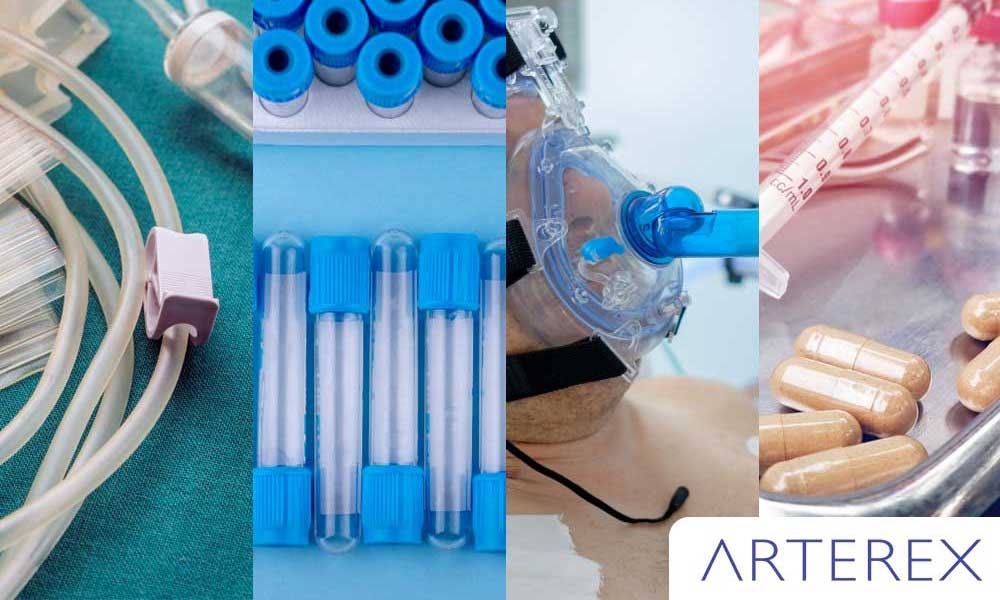
- Neurology. Neurological device components and catheter tubing require tight tolerance, thin wall, and multi-lumen constructions that maintain flexibility without collapsing through tortuous anatomy.
- Laparoscopic and surgical technologies. Surgical devices depend on extruded components for insufflation, irrigation, aspiration, and the routing of energy delivery elements within instrument shafts.
- Respiratory and patient monitoring. Capnography tubing sets, ventilator components, and oxygen therapy tubing rely on consistent bore, kink resistance, and reliable connector bonds.
- Catheter construction. Bonded PVC catheter guide tubes and related extrusions form the structural backbone of catheter-based devices across multiple specialties.
- Diagnostics and sample collection. Sample collection sets and specialized monitoring products, including inside and outside diameter controlled fetal scalp monitoring tubing, depend on extrusion for repeatable fluid path geometry.
- Dialysis and renal care. Blood and dialysate lines require material stability, clarity for visual inspection, and consistent bore across long set lengths.
- Infusion and transfusion. Infusion therapy and fluid management sets combine single lumen, bubble, twin, and triple tubing constructions with molded fluid management components.
- Anesthesia and intensive care. Critical care lines require formulations that resist kinking under continuous routing and maintain flow integrity over extended use.
- Urology. Urology devices use extruded tubing where softness, radiopacity, and dimensional consistency all affect patient comfort and procedural control.
- Life science, pharma, and bioprocessing. Complex disposable sets and bioprocessing consumables rely on extruded fluid paths that hold their properties through sterilization and single use handling.
- Surgical detection products. Monofilament x-ray detection threads are extruded into surgical products so that retained items can be identified radiographically.
What Quality and Regulatory Requirements Apply to Medical Tubing Extrusion?
Medical extrusion operates inside a quality framework that governs the environment, the process, the material, and the documentation. The requirements that apply most directly are listed below:
- ISO 13485. The quality management system standard for medical device design and manufacturing, applied across the Arterex network.
- ISO 9001:2015. The quality management system standard applied at the Hudson, Massachusetts extrusion operation.
- Cleanroom classification. ISO Class 7 and ISO Class 8 cleanrooms across the network, including ISO Class 8 cleanroom extrusion space and mobile cleanroom manufacturing capability.
- FDA registration. Facility registration supporting production for the United States market.
- EU MDR. European Union Medical Device Regulation alignment for product supplied into European markets.
- Material qualification and testing aligned with ISO 10993 where patient contact applies.
- Process validation. Installation, operational, and performance qualification protocols, together with gage repeatability and reproducibility studies, establish that the process performs consistently.
- Dimensional verification. Coordinate measuring machines, CNC vision metrology, and inline laser gauging confirm conformance to specification.
- Performance testing. Leak, flow, and pressure testing, accelerated and real time aging, and ISTA transit testing confirm that product performs across its intended life and distribution path.
- Full lot and component traceability through enterprise resource planning systems supports investigation, recall readiness, and audit response.
What Challenges Come With Medical Tubing Extrusion?
Extrusion appears straightforward in outline and becomes demanding in practice. The principal challenges are listed below:
- Holding tolerance across long runs. Small variations in melt temperature, screw speed, line speed, or cooling accumulate over thousands of feet, which makes continuous measurement and closed loop correction essential rather than optional.
- Roundness on thin wall and soft durometer product. Soft, thin walled tubing tends toward ovality as it leaves the tooling, and achieving consistent concentricity at these dimensions depends on vacuum sizing capability and tooling design.
- Material sensitivity. Moisture uptake, thermal degradation windows, and shear sensitivity differ by polymer, and a processing profile developed for one grade rarely transfers directly to another.
- Cleanliness control. Particulate generated by cutting, handling, and coiling has to be controlled within the same environment that produces the tubing, which places demands on facility design and material flow.
- Startup scrap and changeover time. Every line start and tooling change produces off specification material before the process stabilizes, which affects both cost and lead time on short runs and high mix programs.
- Scaling from development to production. A geometry that runs acceptably on a development line may behave differently at production speed, which is why process development and validation need to anticipate commercial volumes.
- Material compliance transitions. Moving a legacy formulation to a DEHP-free or otherwise reformulated compound changes flexibility, bond behavior, and sometimes dimensions, and it requires requalification rather than substitution.
- Supply continuity. Medical grade resins carry long qualification cycles, and securing continuity of supply is part of the engineering effort rather than a purely commercial matter.
How Do You Choose a Medical Tubing Extrusion Partner?
Selecting an extrusion partner determines how much of the program has to be managed across company boundaries. The criteria that matter most are listed below:
- Cleanroom extrusion capability. Confirm the classification of the space in which the tubing is actually extruded, not only the space in which it is packaged.
- In-house compounding. Control of the compound gives the partner the ability to adjust formulation for bond behavior, durometer, radiopacity, and regulatory requirements.
- Tolerance capability. Ask specifically about vacuum sizing, inline gauging, and demonstrated concentricity on geometries comparable to yours.
- Breadth of construction types. A partner capable of single lumen, multi-lumen, profile, paratubing, parawire, and co-extrusion can follow the design as it evolves rather than constraining it.
- Secondary operations under the same roof. Punching, skiving, grinding, tipping, printing, and overmolding performed in the same network preserve traceability and shorten iteration cycles.
- Downstream integration. Access to injection molding, metal components, device assembly, cleaning, packaging, labeling, and sterilization management turns a component supplier into a finished device partner.
- Material range. A broad qualified material set reduces the risk of a redesign when the first material choice does not perform as intended.
- Global footprint. Multiple qualified sites support regional supply, capacity expansion, and continuity planning across programs.
Arterex brings these elements together within a single organization. Our network spans 16 state of the art manufacturing facilities with 24 clean rooms and more than 845,000 square feet of manufacturing space across four continents, supported by more than 2,100 employees across North America, Europe, and Asia. Extrusion sits alongside injection molding and tooling, metals processing, fluid management component manufacturing, medical procedure bags, device assembly, and sterilization management, which allows an extruded component to move through to a finished, packaged device without leaving the network.
One Source for Medical Device Manufacturing
From concept through commercialization, Arterex delivers fully integrated contract manufacturing for Class I, II, and III medical devices.
Our capabilities span design and engineering, compounding, extrusion, injection molding, tooling and mold building, metal processing, blow molding, and advanced assembly, supported by cleanroom facilities and global supply chain expertise.
Trusted by leading MedTech companies, we help you reduce risk, control cost, and accelerate time to market.
- Medical Tubing Extrusion: Types, Process, Materials, and Applications
- What Is Medical Tubing Extrusion?
- What Are the Types of Medical Tubing?
- What Are the Types of Wearable Medical Devices?
- How Does the Medical Tubing Extrusion Process Work?
- What Secondary Operations Are Performed on Extruded Medical Tubing?
- What Are the Applications of Medical Tubing in Healthcare?
- What Quality and Regulatory Requirements Apply to Medical Tubing Extrusion?
- What Challenges Come With Medical Tubing Extrusion?
- How Do You Choose a Medical Tubing Extrusion Partner?