
AI in Medical Devices: Applications, Benefits, Challenges, Regulations, and Future Trends
Written by
Arterex Medical
Published on
September 26 , 2025
Read time
28 minute read
Artificial Intelligence (AI) in medical devices is reshaping healthcare by enabling smarter diagnostics, personalized treatments, real-time monitoring, and predictive insights that improve outcomes and efficiency. Unlike traditional devices that follow fixed rules, AI-enabled systems learn from data, adapt to changing clinical conditions, and deliver patient-specific recommendations. They are already used across specialties such as radiology, cardiology, pathology, dermatology, and critical care, where they detect diseases earlier, predict complications, and support physicians with accurate, data-driven decisions.

These devices rely on core technologies like machine learning, deep neural networks, natural language processing, computer vision, and advanced sensors, often integrated with cloud computing or edge processing for real-time analysis. Their benefits include faster diagnosis, reduced false positives, personalized medicine, enhanced patient safety, workflow efficiency, and expanded healthcare access in underserved regions. However, challenges remain, particularly around data quality, algorithmic bias, clinical integration, liability, and technical robustness, which must be addressed to ensure safe and equitable adoption.
Globally, regulators are adapting. The U.S. FDA has introduced lifecycle oversight, Good Machine Learning Practices, and change-control mechanisms, while the European Union’s AI Act enforces strict standards for high-risk AI-enabled devices. Both regions emphasize transparency, bias mitigation, continuous monitoring, and real-world validation. Looking ahead, AI medical devices will grow more autonomous, integrate genomic and multimodal data for precision medicine, and expand access through portable diagnostics and telemedicine. Emerging frontiers such as quantum computing, brain-computer interfaces, and AI-driven drug discovery promise to push the boundaries of healthcare even further, creating a future of smarter, faster, and more personalized medical care.
What Is AI in Medical Devices?
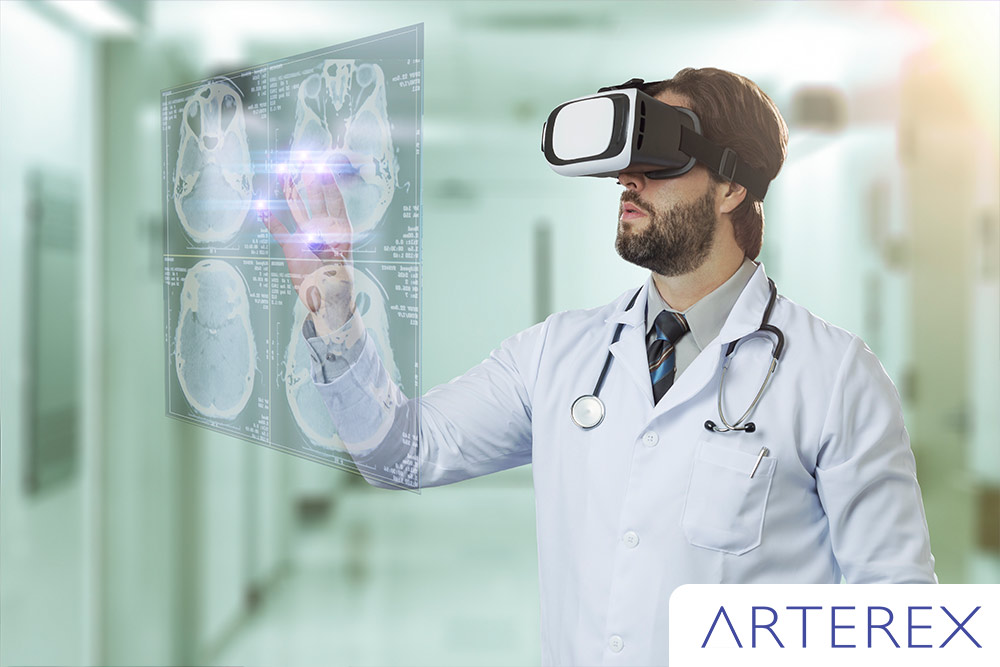
Artificial Intelligence (AI) in medical devices integrates machine learning, deep learning, and other AI technologies into medical equipment and software to improve diagnostics, treatment planning, and patient care. These devices analyze large amounts of medical data, recognize patterns that may be imperceptible to clinicians, and provide decision support or autonomous interventions.
AI applications range from imaging systems that detect early-stage cancers to predictive tools that anticipate patient deterioration in intensive care. Devices may offer recommendations to healthcare providers or operate autonomously, with AI algorithms embedded in hardware, cloud-based systems, or a combination of both.
Key features of AI-enabled devices include the ability to learn from data, adapt to new information, and improve over time. Unlike traditional devices with fixed rules, AI-powered systems can manage complex, non-linear data and deliver personalized insights for individual patients.
Why Does AI in Medical Devices Matters?
AI in medical devices is transforming healthcare by improving patient care, clinical decision-making, and healthcare delivery efficiency.
Enhanced Diagnostic Accuracy and Speed
AI devices analyze medical data rapidly and precisely, detecting subtle patterns in images, lab results, and patient monitoring that humans might miss. For example, AI in radiology can identify early-stage tumors, predict disease progression, and reduce false positives, enabling earlier interventions and better treatment outcomes.
Addressing Workforce Shortages
With shortages in specialized fields like radiology, pathology, and cardiology, AI helps healthcare professionals manage larger patient volumes without compromising care. AI can pre-screen cases, prioritize urgent conditions, and provide preliminary assessments, allowing clinicians to focus on complex decisions.
Personalized Medicine and Treatment Optimization
AI enables individualized healthcare by analyzing patient characteristics, genetic data, medical history, and real-time physiological information. This allows for customized treatment plans, precise drug dosing, and tailored risk assessments, improving effectiveness and minimizing side effects.
Real-Time Monitoring and Predictive Analytics
AI devices continuously monitor patients and predict potential health crises such as sepsis, cardiac events, or respiratory failure. Early warnings enable proactive interventions, reduce complications, and shorten hospital stays.
Cost Reduction and Healthcare Efficiency
By improving diagnostics, preventing unnecessary procedures, and optimizing treatments, AI reduces healthcare costs, minimizes redundant testing, and streamlines workflows, leading to better resource utilization.
Democratization of Healthcare Access
Portable AI-enabled devices extend high-quality care to underserved populations and remote areas, reducing health disparities and ensuring access to advanced medical assessments in rural or resource-limited settings.
Advancing Medical Research and Drug Development
AI generates real-world evidence from diverse patient populations, providing insights into disease mechanisms, treatment effectiveness, and drug safety. This accelerates medical research and enables faster development of new therapies and interventions.
What Are AI-Enabled Medical Devices?
AI-enabled medical devices are advanced healthcare instruments that integrate traditional medical hardware with intelligent software to perform, enhance, or automate tasks that previously required human expertise. They leverage pattern recognition, predictive analytics, and decision-support algorithms to improve diagnostics, monitoring, and treatment.
These devices generally have three core components: systems to collect patient data, AI algorithms to analyze it, and output mechanisms that provide actionable insights or automated interventions. Their AI capabilities allow them to learn from data, adapt to new situations, and improve performance over time without manual reprogramming.
Functionally, AI-enabled devices include diagnostic tools that identify diseases or abnormalities, therapeutic devices that guide or deliver treatments, monitoring devices that track patient status and alert clinicians to changes, and predictive devices that forecast health outcomes or disease progression.
Autonomy varies: some devices offer recommendations for clinician review, while others operate independently under safety oversight. The underlying intelligence comes from machine learning on large datasets, deep neural networks for complex pattern recognition, natural language processing for clinical text, and computer vision for medical images—chosen according to the device’s purpose and data type.
What Are Examples of AI-Enabled Medical Devices?
The examples of AI-enabled medical devices are listed below:
AI-enabled medical devices are used across nearly every medical specialty, showcasing the versatility of artificial intelligence in healthcare.
Medical Imaging and Radiology:
AI analyzes radiological images quickly and accurately. Examples include CT scanners that detect strokes within minutes, mammography systems that identify suspicious breast lesions, and retinal imaging devices that diagnose diabetic retinopathy, glaucoma, and macular degeneration.
Cardiology and Cardiac Monitoring:
AI-enhanced ECG devices detect arrhythmias and heart attacks in real-time, while wearable monitors differentiate between normal and abnormal heart rhythms. AI-powered echocardiography systems measure cardiac function and identify structural abnormalities with high precision.
Critical Care and Patient Monitoring:
AI continuously evaluates vital signs and lab results in intensive care, predicting sepsis, respiratory failure, and other complications. Smart infusion pumps adjust medication dosing based on patient response.
Surgical and Interventional Devices:
AI-assisted surgical systems provide precision guidance, plan procedures, predict complications, and minimize damage to healthy tissue.
Pathology and Laboratory Medicine:
AI analyzes tissue samples, blood smears, and cytology specimens, identifying cancer cells, classifying tumors, and predicting treatment responses. Automated analyzers detect and classify blood cell abnormalities.
Dermatology and Skin Health:
AI devices examine skin lesions, assess cancer risk, classify conditions, and recommend follow-up care.
Drug Discovery and Pharmacology:
AI predicts molecular behavior, identifies drug targets, optimizes clinical trial design, and evaluates the effectiveness of potential therapeutic compounds.
What is The Difference Between Traditional and AI-Powered Devices?
The difference between traditional and AI-powered medical devices highlights a shift from static, rule-based tools to intelligent, adaptive systems that can learn, predict, and personalize care. This transformation enables more accurate diagnostics, proactive interventions, and streamlined clinical workflows.
Data Processing:
Traditional devices follow fixed algorithms and pre-set rules, analyzing data in a static way. AI devices use adaptive algorithms that learn from new data, improving performance and handling complex, multi-variable situations.
Pattern Recognition:
Traditional systems detect obvious abnormalities but may miss subtle or complex patterns, leading to false positives or negatives. AI devices excel at recognizing subtle changes and integrating multiple data sources, identifying early-stage conditions that might escape human or rule-based detection.
Personalization:
Traditional devices apply uniform thresholds and reference ranges for all patients. AI devices tailor recommendations based on individual patient profiles, medical history, and real-time data for personalized care.
Predictive Capabilities:
Traditional devices monitor current conditions and alert when thresholds are exceeded but cannot forecast future events. AI devices use predictive analytics to anticipate deterioration or complications before clinical symptoms appear.
Learning Over Time:
Traditional devices maintain static performance unless manually updated. AI devices continuously learn from new patient data, improving accuracy and adapting to emerging disease patterns and clinical practices.
Integration and Workflow:
Traditional devices often operate in isolation, requiring manual data consolidation. AI devices integrate multiple data streams, providing holistic insights and streamlining clinical workflows.
Regulatory Considerations:
Traditional devices have predictable, well-established approval processes. AI devices require evolving regulatory frameworks due to their adaptive nature, focusing on transparency, bias mitigation, and ongoing monitoring.
End-to-End Medical Device Manufacturing Solutions
From concept to commercialization, Arterex Medical delivers fully integrated contract manufacturing solutions for Class I, II, and III medical devices.
With advanced cleanroom facilities, precision manufacturing, and global supply chain expertise, we ensure compliance, scalability, and consistent product quality.
Trusted by leading MedTech companies, we help you reduce risk, optimize costs, and accelerate time-to-market.
Partner With Us →What Are the Applications of AI in Medical Devices?
The applications of AI in medical devices span the entire healthcare spectrum, transforming how medical professionals diagnose, treat, monitor, and prevent diseases across multiple clinical domains.
Diagnostic Applications
AI-powered diagnostic devices excel in pattern recognition and anomaly detection across various medical imaging modalities. In radiology, AI algorithms analyze chest X-rays to detect pneumonia, tuberculosis, and lung cancer with accuracy comparable to experienced radiologists. Computed tomography (CT) systems equipped with AI can identify stroke symptoms within minutes of image acquisition, dramatically reducing time-to-treatment for critical patients.
Pathology applications include digital microscopy systems that analyze tissue samples for cancer detection, grade tumors, and predict treatment responses. AI-enabled devices in ophthalmology examine retinal photographs to diagnose diabetic retinopathy, glaucoma, and age-related macular degeneration, enabling early intervention in underserved populations where specialist access is limited.
Therapeutic and Treatment Applications
AI-driven therapeutic devices optimize treatment delivery and personalize interventions based on individual patient characteristics. Precision medicine platforms use AI to analyze genetic profiles, biomarkers, and clinical data to recommend optimal drug selections and dosing regimens. Radiation therapy systems employ AI to precisely target tumors while minimizing damage to healthy tissue, improving treatment outcomes and reducing side effects.
Robotic surgical systems integrate AI to enhance surgical precision, provide real-time guidance during procedures, and predict potential complications before they occur. These applications extend to minimally invasive procedures, where AI assists in navigation through complex anatomical structures and optimizes surgical approaches.
Monitoring and Predictive Applications
Continuous patient monitoring represents one of the most impactful applications of AI in medical devices. Critical care monitoring systems analyze multiple physiological parameters simultaneously to predict sepsis, cardiac events, and respiratory failure hours before clinical symptoms manifest. These early warning systems enable proactive interventions that significantly reduce mortality rates and healthcare costs.
Wearable devices equipped with AI algorithms monitor chronic conditions such as diabetes, heart disease, and sleep disorders, providing real-time feedback and alerts to both patients and healthcare providers. Remote monitoring applications extend quality healthcare to patients in their homes, reducing hospital readmissions and improving quality of life.
Drug Discovery and Development Applications
AI accelerates pharmaceutical research by analyzing vast molecular databases to identify potential drug targets and predict compound effectiveness. Machine learning algorithms screen millions of chemical compounds in silico, dramatically reducing the time and cost associated with traditional drug discovery processes.
Clinical trial optimization represents another significant application, where AI algorithms identify suitable patient populations, predict enrollment challenges, and optimize trial protocols to improve success rates and reduce development timelines.
What Are the Technologies Powering AI in Medical Devices?
The technological foundation of AI-enabled medical devices encompasses several interconnected artificial intelligence methodologies and supporting technologies that enable sophisticated medical applications.
Machine Learning Algorithms
Supervised learning algorithms form the backbone of many diagnostic AI devices, trained on labeled medical datasets to recognize patterns and make predictions. These algorithms excel in classification tasks such as identifying disease states from medical images or predicting treatment outcomes based on patient characteristics.
Unsupervised learning techniques discover hidden patterns in medical data without prior labeling, particularly valuable for identifying new disease subtypes or understanding complex biological processes. Reinforcement learning algorithms optimize treatment protocols by learning from patient responses and outcomes over time.
Deep Learning and Neural Networks
Convolutional Neural Networks (CNNs) power most medical imaging applications, mimicking the human visual cortex to analyze radiological images, pathology slides, and other visual medical data. These networks can identify subtle patterns invisible to human observers and process images with unprecedented speed and accuracy.
Recurrent Neural Networks (RNNs) and Long Short-Term Memory (LSTM) networks excel in analyzing time-series medical data, such as continuous vital sign monitoring, electrocardiogram interpretation, and longitudinal patient health tracking.
Natural Language Processing
Natural Language Processing (NLP) technologies enable AI devices to interpret and analyze unstructured medical text, including clinical notes, radiology reports, and medical literature. These systems extract relevant information from electronic health records, support clinical decision-making, and facilitate automated documentation.
Computer Vision
Advanced computer vision algorithms enable medical devices to interpret visual medical data with human-level or superior accuracy. These technologies power applications ranging from automated retinal screening to surgical guidance systems, combining image processing, pattern recognition, and deep learning techniques.
Edge Computing and Cloud Integration
Edge computing technologies allow AI processing to occur directly within medical devices, enabling real-time analysis and reducing latency for critical applications. Cloud-based AI platforms provide scalable computing resources for complex algorithms and enable continuous learning from distributed medical device networks.
Sensor Technologies
Advanced sensor technologies provide the high-quality data inputs essential for AI algorithm performance. These include high-resolution imaging sensors, multi-parameter physiological monitors, and molecular diagnostic sensors that generate the rich datasets required for AI analysis.
What Are the Benefits of AI in Medical Devices?
AI integration in medical devices delivers transformative benefits across patient care, healthcare operations, and medical research, fundamentally improving healthcare delivery and outcomes.
Enhanced Diagnostic Accuracy and Speed
AI-powered medical devices demonstrate superior diagnostic accuracy compared to traditional methods, particularly in detecting subtle or early-stage conditions. These systems process medical data in seconds or minutes rather than hours or days, enabling rapid clinical decision-making. Studies show AI diagnostic systems achieving accuracy rates exceeding 95% in many applications, with significantly reduced false positive and negative rates.
The speed advantage proves crucial in emergency situations where rapid diagnosis directly impacts patient survival. AI-enabled stroke detection systems, for example, can identify large vessel occlusions within minutes of CT scan acquisition, facilitating immediate treatment decisions that improve patient outcomes.
Improved Patient Safety and Outcomes
Predictive analytics capabilities enable AI devices to identify at-risk patients before complications develop, allowing for proactive interventions that prevent adverse events. Hospital early warning systems using AI have demonstrated reductions in unexpected deaths, cardiac arrests, and intensive care unit transfers.
Medication safety represents another significant benefit area, where AI systems analyze patient profiles, drug interactions, and physiological responses to optimize dosing and minimize adverse drug events. These applications particularly benefit high-risk populations such as pediatric and geriatric patients.
Cost Reduction and Resource Optimization
AI-enabled medical devices reduce healthcare costs through multiple mechanisms: decreased diagnostic testing redundancy, reduced length of stay, prevention of complications, and optimized resource utilization. Healthcare systems implementing AI diagnostic tools report cost savings of 20-30% in affected clinical areas.
Workflow optimization through AI automation reduces the burden on healthcare professionals, enabling them to focus on complex cases requiring human expertise while AI handles routine tasks and preliminary assessments.
Democratization of Healthcare Access
AI-powered medical devices extend specialist-level care to underserved populations and remote areas. Portable diagnostic devices with AI capabilities can provide sophisticated medical assessments in resource-limited settings, reducing health disparities and improving global health outcomes.
Telemedicine platforms enhanced with AI enable remote monitoring and consultation, particularly beneficial for chronic disease management and preventive care in rural or economically disadvantaged communities.
Personalized Medicine and Treatment Optimization
AI enables truly personalized healthcare by analyzing individual patient characteristics, genetic profiles, and real-time physiological data to tailor treatments. This personalization improves treatment effectiveness while minimizing adverse effects, representing a shift from one-size-fits-all medicine to precision healthcare.
Engineer AI-Powered Medical Devices with Confidence
Transform your AI innovation into a market-ready medical device with Arterex Medical’s advanced design and engineering expertise.
From intelligent system design and data integration to validation and regulatory compliance, we support the full lifecycle of AI-enabled Class I, II, and III devices.
Navigate FDA, EU MDR, and evolving AI regulations with a partner experienced in building safe, scalable, and future-ready medical technologies.
Build Your AI Device →What Challenges Come With AI in Medical Devices?
Despite significant benefits, AI implementation in medical devices faces substantial challenges that must be addressed to ensure safe, effective, and equitable healthcare delivery.
Data Quality and Availability Challenges
AI algorithms require large, high-quality, representative datasets for effective training and validation. Medical data often suffers from incompleteness, inconsistency, and bias, potentially leading to algorithmic performance issues. Historical medical datasets may not represent current patient populations or clinical practices, limiting AI system effectiveness.
Data privacy and security concerns create additional barriers to data sharing and collaboration necessary for AI development. Healthcare organizations must balance the benefits of data sharing for AI advancement with strict privacy protection requirements.
Algorithmic Bias and Fairness
AI systems can perpetuate or amplify existing healthcare disparities if training data lacks diversity or contains historical biases. Algorithms trained primarily on data from specific demographic groups may perform poorly for underrepresented populations, potentially exacerbating health inequities.
Addressing bias requires careful attention to dataset composition, algorithm design, and ongoing performance monitoring across diverse patient populations. This challenge is particularly significant in healthcare, where biased AI systems can have life-threatening consequences.
Clinical Integration and Workflow Disruption
Integrating AI-powered devices into existing clinical workflows presents significant challenges. Healthcare professionals may resist technology that changes established practices or requires new skills. Poor integration can lead to alert fatigue, workflow inefficiencies, and potential safety risks.
Successful implementation requires careful change management, comprehensive training programs, and ongoing support to ensure AI tools enhance rather than hinder clinical practice.
Regulatory and Liability Concerns
The dynamic nature of AI systems creates unique regulatory challenges. Traditional medical device regulations assume static device behavior, while AI systems continuously learn and evolve. Regulatory frameworks must adapt to address algorithmic transparency, performance monitoring, and liability assignment when AI systems make errors.
Healthcare providers face uncertainty about liability when relying on AI recommendations, particularly for autonomous or semi-autonomous AI systems. Clear guidelines and legal frameworks are essential for widespread AI adoption.
Technical Reliability and Robustness
AI systems can exhibit unpredictable behavior when encountering data significantly different from their training datasets. Ensuring robust performance across diverse clinical scenarios and patient populations remains challenging. Technical failures or algorithmic errors in medical AI systems can have serious patient safety implications.
Maintaining AI system performance over time requires ongoing monitoring, validation, and updates as medical knowledge and practices evolve.
How Are AI-Enabled Medical Devices Regulated?
AI-enabled medical devices evolve over time, so regulators focus on lifecycle oversight, transparency, and risk-based evaluation. In 2024–2025, agencies like the U.S. FDA and the European Commission introduced frameworks to ensure their safety and effectiveness.
The U.S. FDA’s Approach
Current FDA Regulatory Framework
In January 2024, the FDA issued its most comprehensive guidance for AI-enabled medical devices, covering the entire Total Product Life Cycle (TPLC). The Software as a Medical Device (SaMD) framework provides a risk-based method for evaluating devices depending on how they influence clinical decision-making. Recognizing that AI models may need frequent updates, the FDA allows predetermined change control plans, enabling manufacturers to make algorithmic modifications without resubmitting full applications.
Transparency and Bias Mitigation
In June 2024, the FDA expanded its position with principles on Transparency for Machine Learning-Enabled Medical Devices (MLMDs). The guidance emphasizes human-centered design, requiring developers to describe workflows, interfaces, and interactions with connected systems. Transparency is critical to ensure clinicians, patients, and regulators understand how AI outputs are generated and how risks are managed. The agency also highlights the importance of addressing algorithmic bias to prevent unequal outcomes across patient populations.
Good Machine Learning Practice (GMLP)
The FDA has established Good Machine Learning Practice guidelines that define foundational principles for high-quality AI device development. These principles include ensuring training data represent diverse populations, maintaining reproducibility in model performance, and continuously monitoring safety as systems evolve.
European Union Regulations
The EU AI Act and Medical Devices
Europe has taken a groundbreaking step by adopting the Artificial Intelligence Act (AIA), the world’s first comprehensive AI law. The AIA works alongside the Medical Device Regulation (MDR), creating a dual compliance pathway for AI-enabled devices. Medical devices powered by AI are classified as high-risk systems, requiring strict adherence to standards in risk management, transparency, human oversight, and robustness. This dual framework ensures that medical AI technologies are both safe and trustworthy.
EU AI Act Implementation Timeline
- Aug 2024 – AI Act enters into force.
- Feb 2025 – Provisions on prohibited AI systems apply.
- Aug 2025 – Transparency obligations take effect.
- Aug 2026 – Full compliance required for high-risk AI systems, including medical devices.
- Aug 2027 – High-Risk AI Systems (HRAIS) must carry conformity certificates from notified bodies.
This staged rollout allows manufacturers time to align development and compliance processes with evolving legal requirements.
Risk Classification and Regulatory Assessment
AI-enabled devices are classified according to their intended use, autonomy, and potential patient risks. The FDA’s approach considers clinical context, the device’s role in decision-making, and the consequences of incorrect outputs. Higher-risk applications require extensive validation and monitoring.
Approval patterns reflect domain maturity: between the 1990s and mid-2024, radiology devices accounted for 76% of AI approvals, compared to just 10% for cardiovascular systems. This indicates that while imaging has matured, other clinical areas are still in earlier adoption phases.
Clinical Validation and Evidence Requirements
Robust evidence is central to regulatory approval. Agencies require clinical validation across diverse patient groups and care settings, with particular attention to bias, generalizability, and performance consistency. Because AI systems can adapt over time, traditional randomized controlled trials (RCTs) may not always capture their evolving nature. Regulators encourage novel study designs and adaptive endpoints that account for continuous learning.
The FDA’s 2024 draft guidance also stresses the importance of documenting development choices, risk management strategies, and validation methods throughout the device’s lifecycle. This ensures accountability and facilitates post-market evaluation.
Post-Market Surveillance and Continuous Monitoring
Both the FDA and EU stress that regulatory responsibility does not end with approval. AI-enabled devices must be continuously monitored for safety and effectiveness. Manufacturers are expected to track real-world performance, detect algorithmic drift, and evaluate outcomes across different populations.
Post-market obligations include reporting adverse events linked to AI outputs, monitoring population-level variations, and updating systems to address emerging risks. This lifecycle approach acknowledges that AI models are dynamic and must be supervised long after deployment.
International Harmonization Efforts
Regulatory frameworks are becoming more aligned as agencies seek global consistency. Health Canada, Australia’s Therapeutic Goods Administration (TGA), and Japan’s Pharmaceuticals and Medical Devices Agency (PMDA) have each developed risk-based AI frameworks similar to those of the FDA and EU. However, regional differences remain in implementation timelines and specific requirements.
International collaboration aims to reduce fragmentation and help manufacturers bring AI-enabled medical devices to global markets more efficiently. Over time, convergence around shared principles—transparency, risk management, and continuous oversight—will create a more predictable regulatory environment worldwide.
What Does the Future of AI in Medical Devices Look Like?
AI in medical devices will advance healthcare through faster computing, greater autonomy, and deeper personalization.
Technological Progress
Quantum computing may enable real-time drug modeling and genomic analysis, while federated learning will allow secure collaboration on AI development across institutions. Multimodal systems combining imaging, lab data, and clinical notes will deliver more accurate diagnoses and tailored treatments.
Autonomous Systems
Future devices may include surgical robots that handle routine procedures, AI-driven ICU systems that manage care protocols, and closed-loop therapies like artificial pancreas systems that adjust treatment automatically.
Precision Medicine
AI will integrate genomic and biological data to personalize treatments and predict risks, while population health tools will track disease patterns, forecast epidemics, and optimize resource use.
Access and Equity
Portable, affordable AI diagnostics will reach underserved areas, while AI-powered telemedicine will enable specialist-level care remotely, reducing global health disparities.
Regulation
Global standards will emerge for algorithm transparency, bias reduction, and continuous monitoring. Adaptive frameworks will speed approvals using real-world evidence.
Integration
Devices will connect across healthcare ecosystems with standardized data formats, creating hospital-wide AI systems that streamline workflows and improve efficiency.
Emerging Applications
AI-enhanced brain-computer interfaces will restore control for patients with paralysis or neurological disease, and AI-driven drug discovery will cut development timelines dramatically. The convergence of AI with nanotech, biotech, and advanced materials will create new device categories and expand healthcare possibilities.
- AI in Medical Devices: Applications, Benefits, Challenges, Regulations, and Future Trends
- What Is AI in Medical Devices?
- Why Does AI in Medical Devices Matters?
- What Are AI-Enabled Medical Devices?
- What Are Examples of AI-Enabled Medical Devices?
- What is The Difference Between Traditional and AI-Powered Devices?
- What is The Difference Between Traditional and AI-Powered Devices?
- What Are the Applications of AI in Medical Devices?
- What Are the Technologies Powering AI in Medical Devices?
- What Are the Benefits of AI in Medical Devices?
- What Challenges Come With AI in Medical Devices?
- How Are AI-Enabled Medical Devices Regulated?
- What Does the Future of AI in Medical Devices Look Like?